Notes on getting work done by agents
Comparisons, prices as of this month, and what actually works when you hand a task to an AI agent. Written by the people who build and test them.
Gravity vs Relay: Human-in-the-Loop vs Outcome Runtime (2026)
Relay and Gravity both target the "AI drafts, human approves" pattern. The category framing is different. Relay puts the workflow first and the AI inside a step. Gravity puts the outcome first and approval inside the…

Gravity vs Pipedream: Code Steps vs Sentence Runtime (2026)
Pipedream and Gravity get lined up a lot because both can "take a Slack message and do something useful with it." The interface is different, the buyer is different, and the unit of work is different. This is a…

Gravity vs IFTTT: Consumer Triggers vs Autonomous Agents (2026)
IFTTT and Gravity get compared mostly because IFTTT was, for a generation of automators, the entry-level idea of "let one app talk to another." If the same buyer evaluates Gravity today, the question is whether AI…
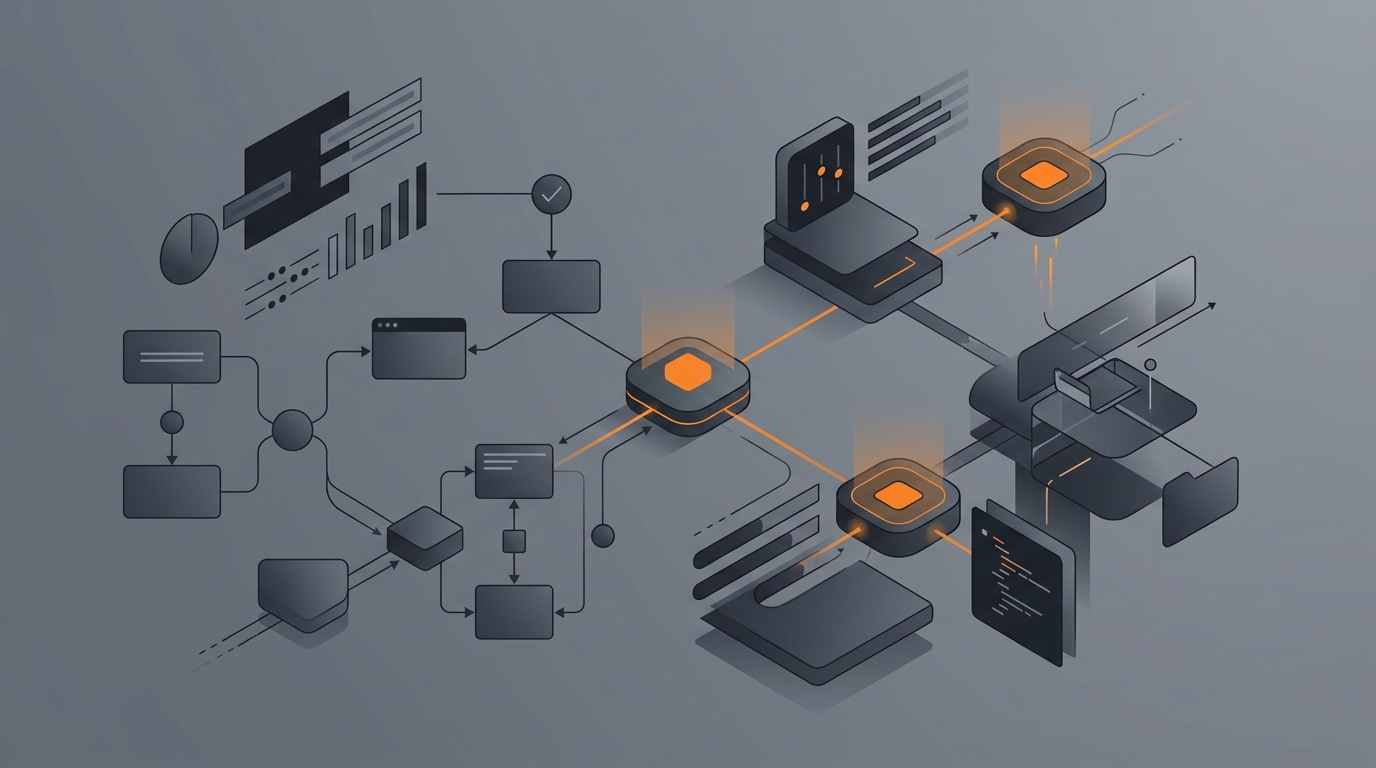
Best Zapier Alternatives Using AI in 2026: Real Agents, Not Steps
"Zapier alternatives" lists were a productivity blog staple for a decade. Then AI happened, and the question changed. The real question is no longer "is there a cheaper Zapier?" but "is there a Zapier-shaped thing…
Best Manus Alternatives in 2026: Recurring Agents, Not One-Off Tasks
Manus took off because it could pick up a vague task description and run a multi-hour autonomous session. That demo is impressive. The follow-up question buyers ask is "does it run every Monday at 9am for me,…

Best Lindy Alternatives in 2026: A Founder's Shortlist
Lindy markets itself as "AI employees" and ships a clean visual flow builder with strong defaults. Most "Lindy alternative" searches start because a buyer hit one of three things: pricing, the canvas being too much…
Best LangChain Alternatives for Non-Developers in 2026
If you have ever read the LangChain docs and thought "I just want the thing to work, not learn another framework," this list is for you. LangChain is a powerful Python library. It is for engineers. Non-developers who…

Best ChatGPT Workspace Agents Alternatives in 2026
ChatGPT Workspace Agents shipped in April 2026 and immediately changed the shortlist for any buyer evaluating "AI agents for my team." If you are already on ChatGPT Plus or Team, agents are bundled and convenient.…

Gravity vs TinyFish: Enterprise Web Agent vs Runtime (2026)
This comparison covers two products that buyers often line up against each other when they shouldn't. TinyFish is an enterprise web agent platform. Gravity is an outcome runtime. The labels look similar at a glance,…

Gravity vs OpenClaw: Browser Agent vs Outcome Runtime (2026)
This comparison covers two products that buyers often line up against each other when they shouldn't. OpenClaw is a browser-driven autonomous agent. Gravity is an outcome runtime. The labels look similar at a glance,…

Gravity vs MindStudio: AI App Builder vs Runtime (2026)
This comparison covers two products that buyers often line up against each other when they shouldn't. MindStudio is a no-code AI app builder. Gravity is an outcome runtime. The labels look similar at a glance, the…
Gravity vs Hermes Agent: Web Agent vs Outcome Runtime (2026)
This comparison covers two products that buyers often line up against each other when they shouldn't. Hermes Agent is a web browser autonomous agent. Gravity is an outcome runtime. The labels look similar at a…

Gravity vs Gumloop: Visual AI Workflow vs Runtime (2026)
This comparison covers two products that buyers often line up against each other when they shouldn't. Gumloop is a visual AI workflow builder. Gravity is an outcome runtime. The labels look similar at a glance, the…

Gravity vs Glean: Enterprise AI Search vs Runtime (2026)
This comparison covers two products that buyers often line up against each other when they shouldn't. Glean is an enterprise AI search and agents. Gravity is an outcome runtime. The labels look similar at a glance,…
Gravity vs Gemini: Google Assistant vs Outcome Runtime (2026)
This comparison covers two products that buyers often line up against each other when they shouldn't. Gemini is a Google AI assistant. Gravity is an outcome runtime. The labels look similar at a glance, the buyer…

Gravity vs ChatGPT: Chat Assistant vs Outcome Runtime (2026)
This comparison covers two products that buyers often line up against each other when they shouldn't. ChatGPT is a conversational AI assistant. Gravity is an outcome runtime. The labels look similar at a glance, the…

Gravity vs Agent.ai: Marketplace vs Outcome Runtime (2026)
This comparison covers two products that buyers often line up against each other when they shouldn't. Agent.ai is an AI agent marketplace. Gravity is an outcome runtime. The labels look similar at a glance, the buyer…
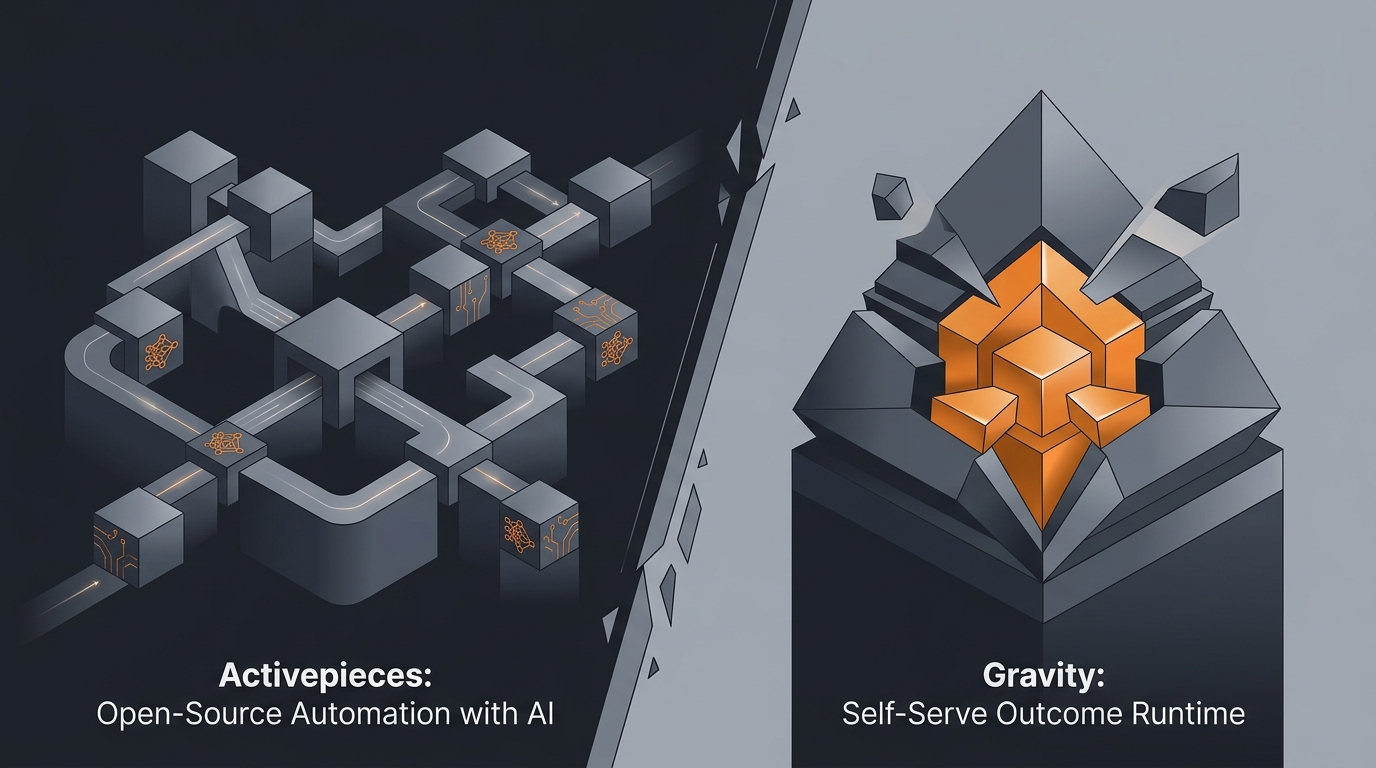
Gravity vs Activepieces: OSS Automation vs Runtime (2026)
This comparison covers two products that buyers often line up against each other when they shouldn't. Activepieces is an open-source workflow automation with AI. Gravity is an outcome runtime. The labels look similar…

Gravity vs Vellum: Prompt Engineering Suite vs Outcome Runtime (2026)
Vellum and Gravity attract different buyers. Vellum's natural buyer is an ML platform engineer at a company shipping AI features. Gravity's natural buyer is a founder or ops lead shipping internal agents.

Gravity vs Stack AI: Visual Agent Builder vs Outcome Runtime (2026)
Stack AI feels like an app builder. Gravity feels like a hiring interface for a process. Both are tools for non-developers to put AI to work, but the design centres are different.

Gravity vs Relevance AI: No-Code Canvas vs Outcome Prompt (2026)
Relevance AI built a category around the AI workforce metaphor, branded sales agents that act like teammates. Gravity is the opposite, anonymous agents defined entirely by what they do. The marketing is different.…

Gravity vs Lyzr: Enterprise Templates vs Outcome Prompt (2026)
Lyzr targets enterprise teams that want safe, packaged agents. Gravity targets anyone who wants to describe a result and have it run. The audiences overlap but the design centres differ.

Gravity vs LangGraph: Outcome Prompts vs Stateful Graphs (2026)
This comparison comes from hands-on use of both: writing LangGraph code in production, and building Gravity from the ground up. It is the framing a team needs when making the same decision today.

Gravity vs LangFlow: Visual Canvas vs Outcome Prompt (2026)
LangFlow is a visual builder. Gravity is not. That is the headline. The interesting question is whether a visual builder is what you actually want once the agent is in production.
Gravity vs Flowise (2026): Flowise Is Archived, Here Is What Changes
This comparison changed on 29 July 2026, when the Flowise team announced a code freeze. The repository was archived on 10 August and the project reached end of life on 31 August.
Gravity vs Dify: LLMOps Canvas vs Outcome Runtime (2026)
Dify and Gravity get compared a lot, but they are not the same kind of product. Dify is a Swiss army knife for LLM-powered apps, with chat, RAG, and agents under one roof. Gravity is a focused runtime for operational…
Gravity vs Botpress: Chatbot-First Agents vs Outcome Runtime (2026)
Botpress and Gravity are often compared because both call themselves agent platforms. Look closer and the design centres are different. Botpress is a chat platform with agent capabilities. Gravity is a headless…
Gravity vs Beam AI: Enterprise APA vs Outcome Runtime (2026)
Beam AI and Gravity get compared a lot in 2026 because both pitch "AI agents that automate business processes." Look closer, the audience and the surface differ.

Gravity vs Zapier: When Workflows Stop Being Enough (2026 Comparison)
Zapier shaped how a generation of small teams thought about automation. The early magic was that a team could connect Stripe to Slack without writing code. Trigger fires, action runs, done. The product has earned its…

Gravity vs n8n: Self-Hosted Workflows vs Outcome-Native Agents (2026)
n8n occupies an interesting position in the 2026 automation market. It is the open-source, self-hostable, developer-friendly answer to Zapier and Make. Founded in 2019 in Berlin by Jan Oberhauser, the project has…