Notes on getting work done by agents
Comparisons, prices as of this month, and what actually works when you hand a task to an AI agent. Written by the people who build and test them.

AI Agent Failure Modes: The Eight Ways Autonomous Agents Break
"Why did the agent fail?" is the question every operator asks the first time an agent misses. The honest answer is almost always one of eight things, and the eight things are different enough that lumping them…

AI Agent Evaluation Metrics: What "Good" Actually Looks Like
"Is the agent any good?" is the question every buyer asks and almost no buyer can answer with a number. The shortage of good answers is not because the metrics are unknown; it is because most vendors publish one or…

AI Agent Benchmarks 2026: The 5 That Actually Matter
The benchmark landscape for AI agents in 2026 is busier than the buyer landscape can absorb. Five benchmarks dominate the conversation: GAIA, SWE-bench, AgentBench, BFCL, and ToolBench. Each measures something…

Agentic RAG vs RAG: Retrieval as a Tool vs Retrieval as a Pipeline
The shift from static RAG to agentic RAG is one of the more useful generalisations in the AI agent stack, partly because it clarifies what the agent is doing and partly because it produces measurably better answers…

Single-Agent vs Multi-Agent: When Do You Actually Need More Than One?
A single-agent system is one AI agent that owns a task from start to finish. It runs a single reasoning loop: read the goal, pick a tool, run it, read the result, decide whether to continue or stop. Everything it…
AI Agent Prompt vs LLM Prompt: 5 Real Differences (2026)
The first time someone writes an agent prompt the way they write an LLM prompt, the agent breaks within the first hour of running. Not because the prompt is wrong in a literal sense; it is just shaped for the wrong…

Why Most AI Agents Stop After One Task
Most AI agents stop after one task. They run the first step, return a confident-sounding output, and then either silently halt, hand back to the human, or hallucinate a "task complete" status that does not match…

How to Update an AI Agent When Your Process Changes
Processes change. New CRM field, new approver, new review step, new tool. The agent that was right last quarter is silently wrong this quarter, and the gap shows up as runs that look fine on the surface but produce…
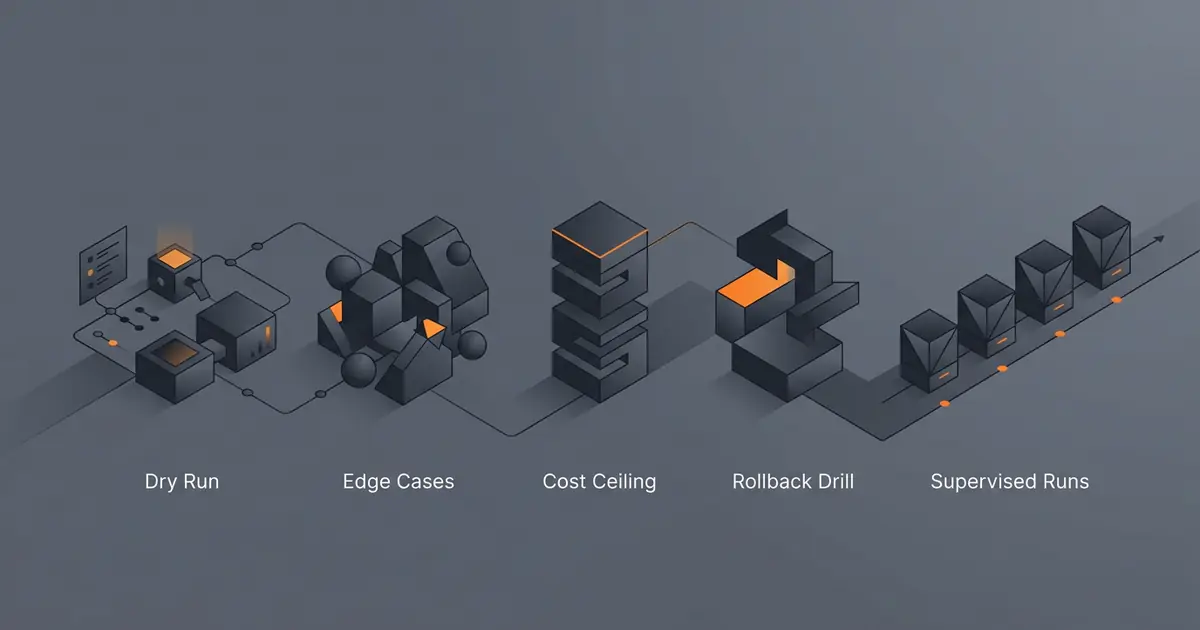
How to Test an AI Agent Before You Deploy It
An AI agent that has not been tested is an AI agent waiting to do something embarrassing or expensive on your behalf. Testing an agent looks different from testing software because the agent does not have a fixed…

How to Share an AI Agent With Your Team Safely
Sharing an AI agent with a team is the moment most agents quietly turn into a liability. The agent that one person built, supervised, and trusted now runs on inputs from people who did not write the prompt, with…
How to Set a Spending Cap on an AI Agent
An AI agent without a spending cap is an open tab on a model provider. Most of the time the bill is small. The expensive day is the one where the agent loops on a malformed input, or chains a search tool with itself…

How to Restrict an AI Agent to Business Hours
Restricting an AI agent to business hours is one of the cheapest reliability wins available. Most agent incidents are not catastrophic; they are awkward. An automated follow-up arriving at 3 a.m. looks like spam. A…

Build vs Buy an AI Agent: A Four-Axis Decision Framework
Build vs buy is the wrong opening question for AI agents. The right opening question is: what would have to be true for either answer to be obvious. The four-axis framework that follows (cost, time, capability,…

Autonomous vs Assistive AI: The Spectrum, Not a Binary
Autonomous AI and assistive AI are usually discussed as if they are different products. They are not. They are different points on the same spectrum, and the spectrum has five measurable axes: decision-making,…

AI Agent for Weekly KPI Reports From Your Stack
The Monday morning KPI summary is the report that should be automated and almost never is. The data exists. The query exists. The template exists. What is missing is the half-hour every Monday that somebody spends…

AI Agent Tool Use Explained: Function Calling, Selection, Recovery
Tool use is what separates a chatbot from an agent. A chatbot talks about sending the email; an agent calls the email-send tool and watches for the result. The mechanism under tool use is function calling,…

AI Agent Reasoning vs Pattern Matching: What Agents Actually Do
Whether AI agents "reason" is a debate that often misses the practical point. The practical point is that different reasoning patterns produce different reliability characteristics on different tasks.…

AI Agent Orchestration Explained: Planner, Executor, Evaluator
Orchestration is the runtime layer that coordinates multi-step agent execution. The LLM thinks; the orchestration decides which step runs next, retries when something fails, evaluates whether the goal is met, and…

AI Agent Myths and Reality: 8 Claims, Debunked
The discourse around AI agents in 2026 carries a lot of myths. Some come from vendor marketing; some come from social-media hot takes; a few are honest misunderstandings of fast-moving terminology. This post takes…

AI Agent Memory Explained: Short-Term, Long-Term, Episodic
AI agent memory is not one thing. It is three layers, each handling a different timescale and a different question. Short-term memory holds what is happening right now. Long-term memory holds what the agent might…

AI Agent Glossary for Buyers: 28 Terms, Defined
Procurement conversations about AI agents fail when buyer and vendor use the same words to mean different things. This glossary defines 28 terms that show up in agent procurement, organised by category. Each entry…
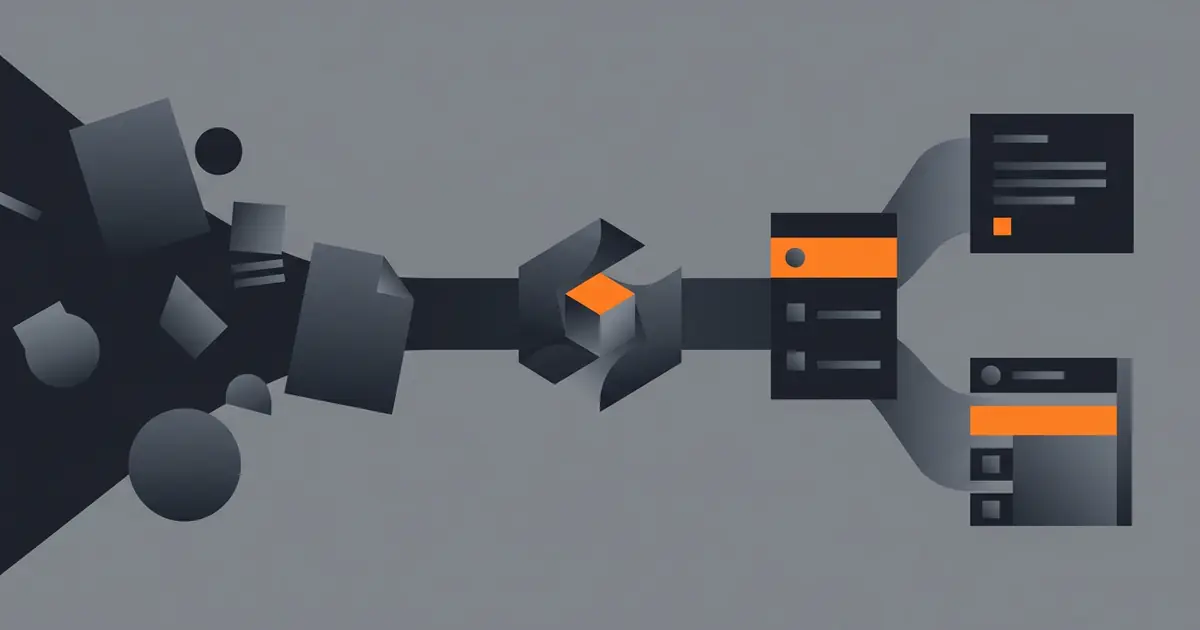
AI Agent for Meeting Follow-Ups: From Notes to Tasks
The post-meeting half hour is the most common place where good intent dies. People agreed to do things; nobody captured who, by when, or what exactly. The follow-up email never goes out. The action items never become…
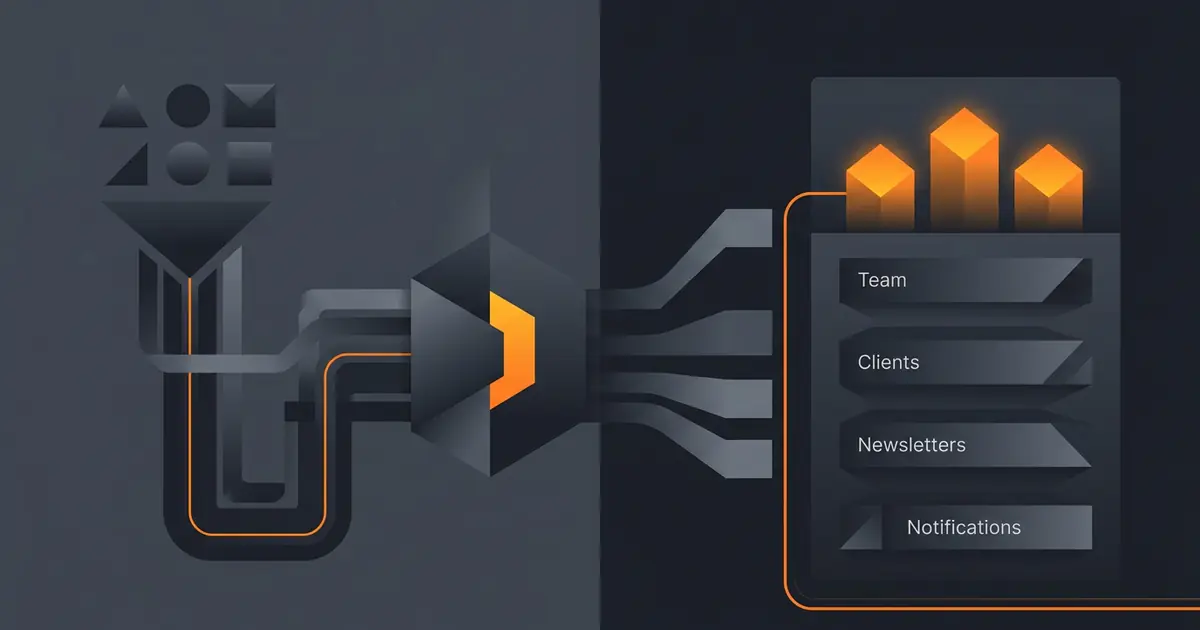
AI Agent for Inbox Triage: Setup and 30-Day Reality Check
An inbox triage agent is the most popular first agent for a reason. The job is well-defined (read inbox, produce a summary), the failure mode is mild (a wrong summary, not a wrong send), and the value is immediate…
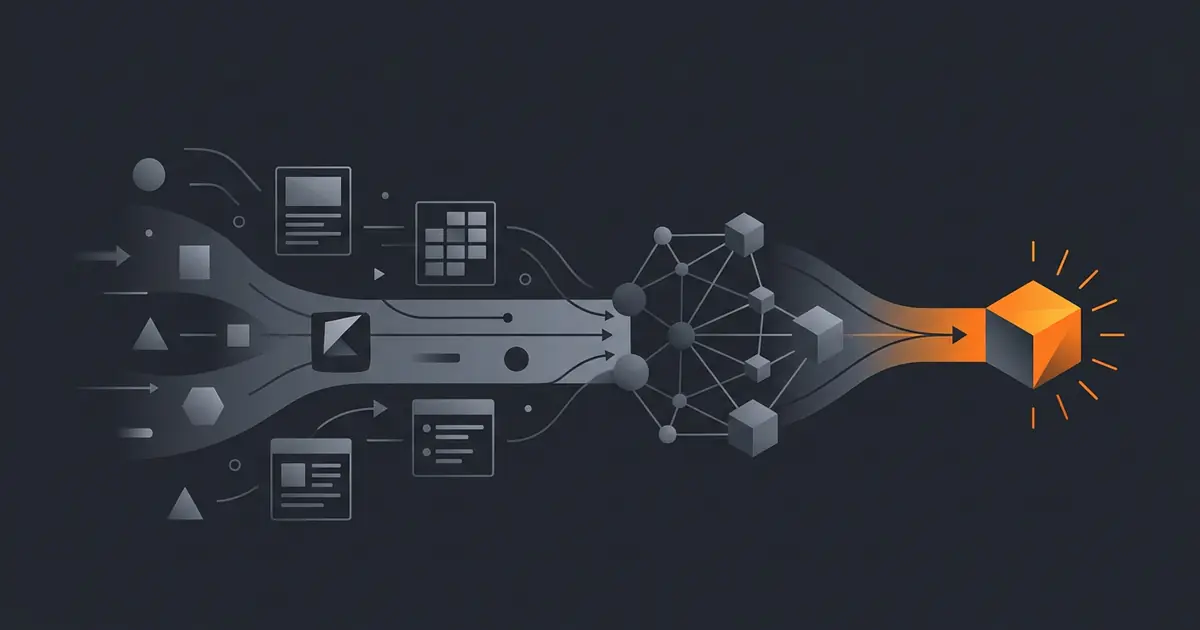
AI Agent for Competitor Tracking: A Practical Setup
Competitor tracking is the use case where the agent shape really pays off. The work is repetitive (read public pages on a schedule), the inputs are stable (a known list of URLs and accounts), the failure mode is mild…
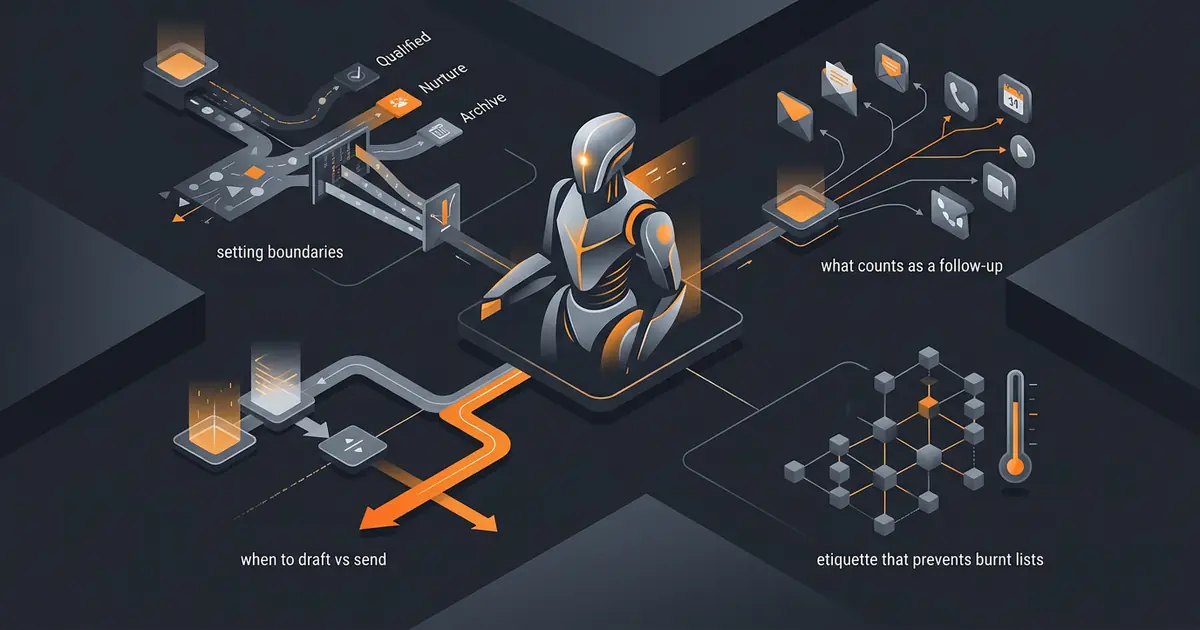
AI Agent for Cold Lead Follow-Up: How It Works
Cold lead follow-up is the use case sales teams want most and the use case where an AI agent is most likely to misbehave. The mechanics are easy: read a lead record, compose a follow-up, send. The hard part is…
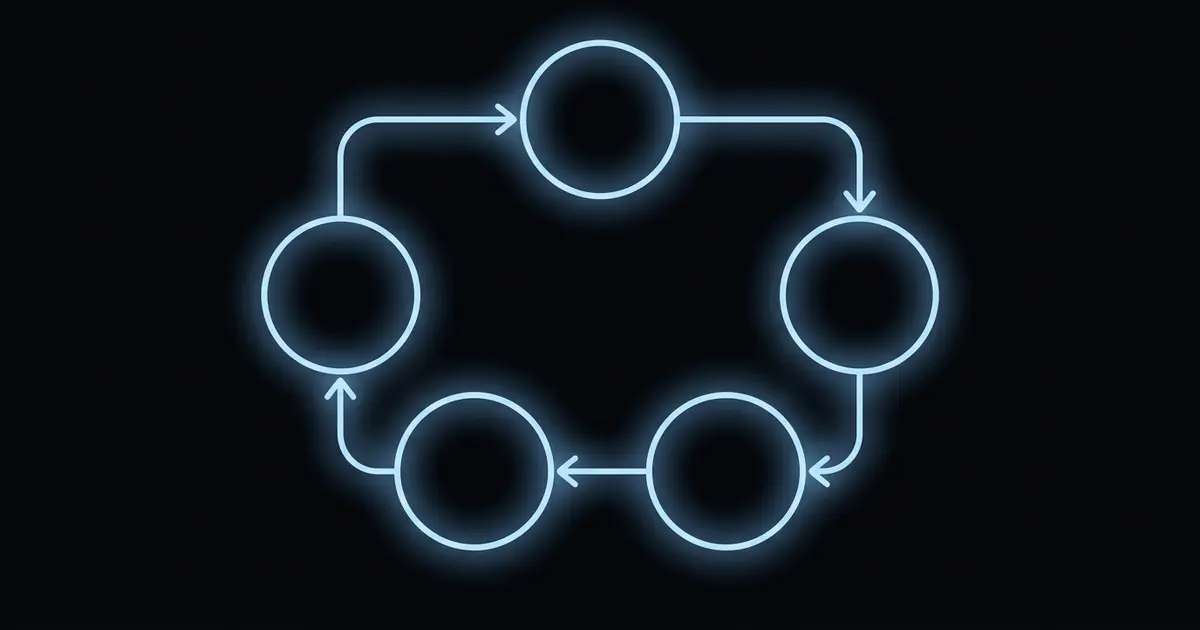
Agentic AI Explained Without Jargon
The word "agentic" carries more weight than it deserves. Strip the jargon and what is left is a five-piece checklist: goals, perception, planning, action, learning. A system that has all five connected is agentic. A…

Why I Still Name My Failed Startups: The Transparency Thesis
I name MindWave, Super AI, and Vibe AI publicly. I write the postmortems with dollar amounts, named decisions, and dates. I link them from the homepage. I link them from every relevant blog post. The default founder…

What Can an AI Agent Actually Do? Capabilities and Boundaries in 2026
"What can AI agents actually do?" is the question every non-developer buyer asks before the discovery call ends. The honest answer is more concrete than the marketing material and less impressive than the demo…

The Honest Cost of Three Shutdowns: A Founder Financial Postmortem
Founders almost never publish the dollar number. The number is uncomfortable, the breakdown is more uncomfortable, and the opportunity cost is the most uncomfortable line of all. So this post does the uncomfortable…

How Vibe AI Feedback Shaped Gravity: The Signals That Became Decisions
Vibe AI did not get to product-market fit, but it got to enough users to be useful. A few hundred actives across late 2025 and early 2026 generated about 1,800 support tickets, 47 cancellation surveys, and roughly…