AI agent tutorials
Practical how-to guides for setting up, configuring, debugging, and running AI agents in 2026. Every guide is tested. Every guide is short. Most apply to any AI agent platform; some are Gravity-specific and marked.
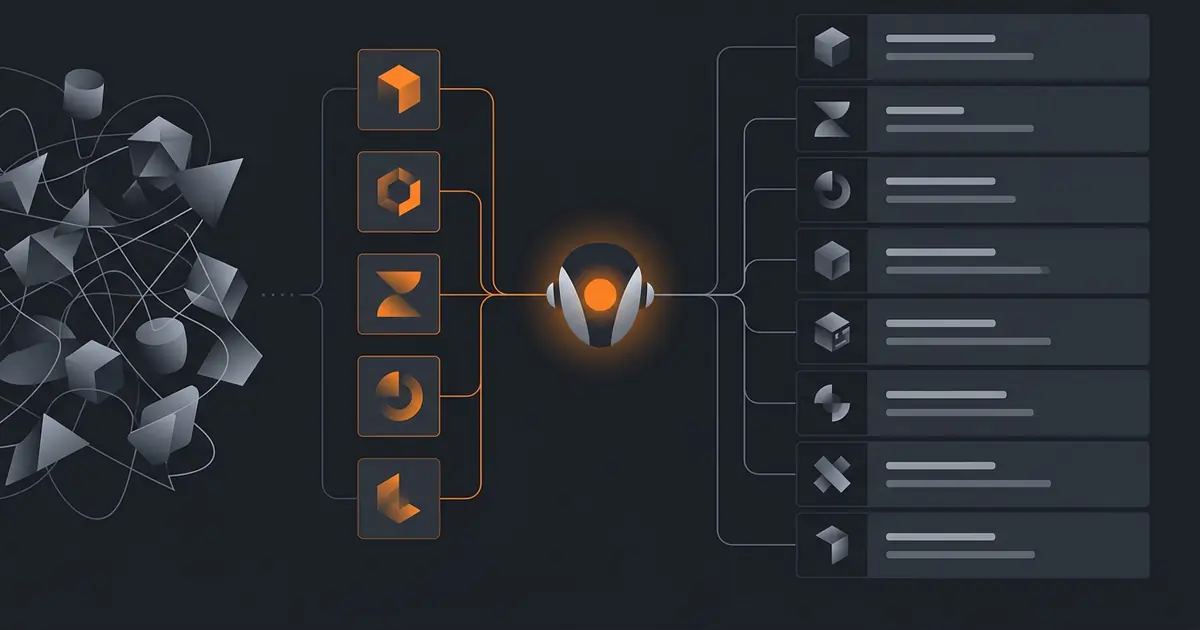
How to Give an AI Agent Multiple Tools (Without Confusing It)
The first agent you ship has three tools. The third one has thirty. Somewhere between three and thirty, reliability cliffs and you cannot tell why. The cliff is real, the causes are predictable, and the mitigations…
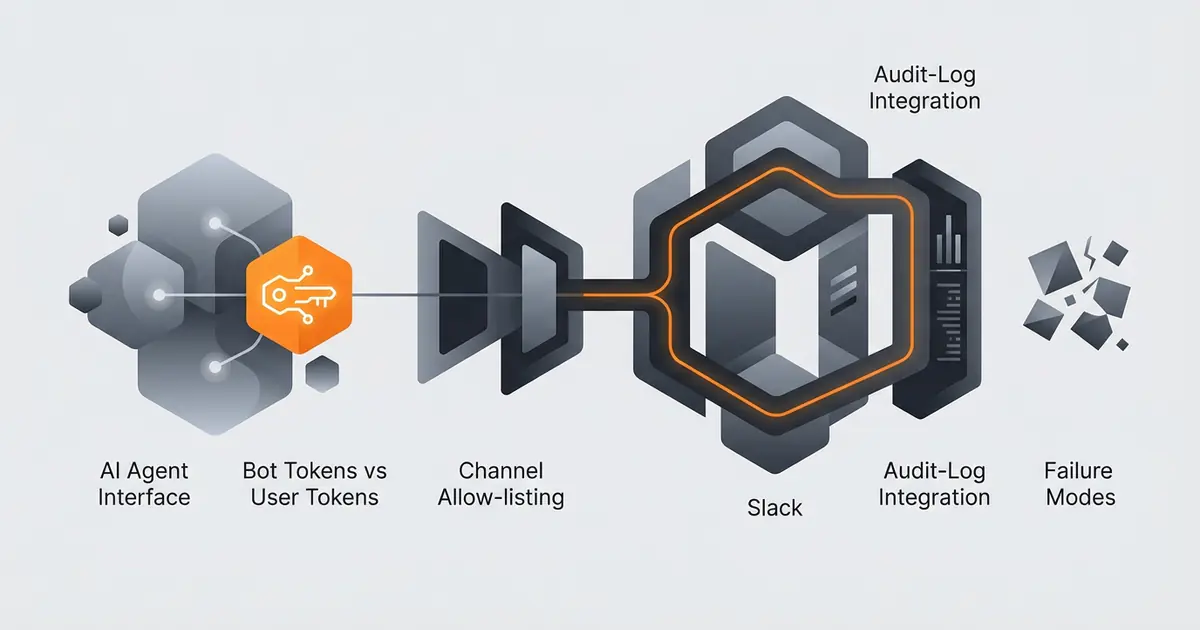
How to Connect an AI Agent to Slack (Safely)
Most teams connect their first agent to Slack in 30 minutes using a personal token, then spend three weeks unpicking the consequences. This guide is the safe path from start: a bot app, narrow scopes, allow-listed…
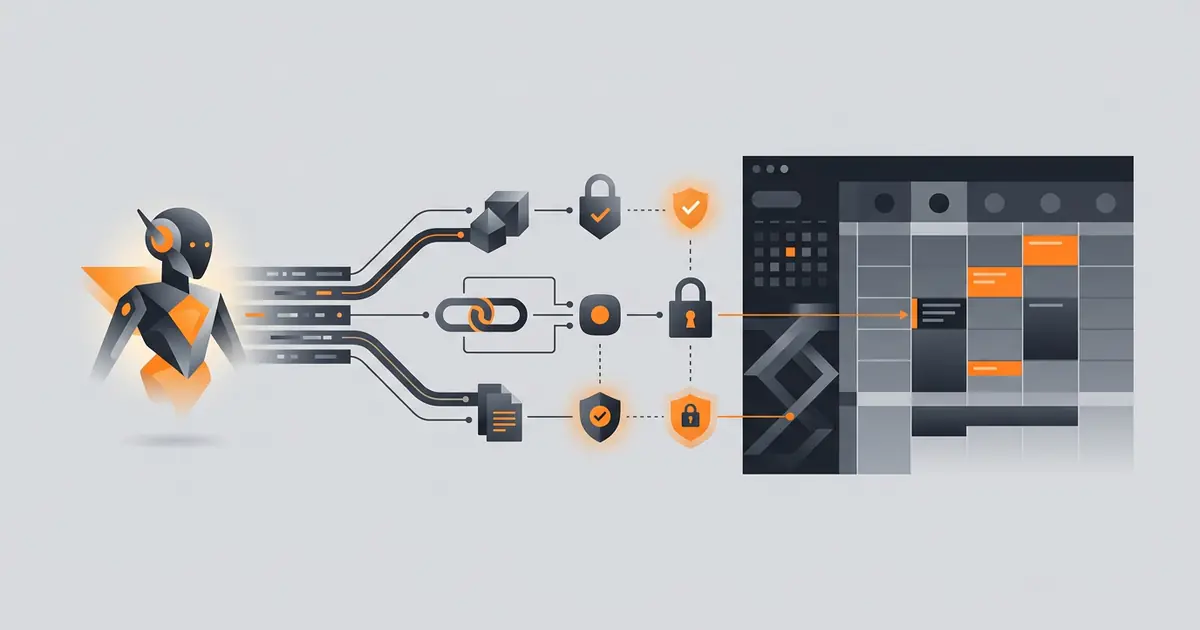
How to Connect an AI Agent to Google Calendar (Safely)
An agent that can put events on your calendar saves an hour a week. An agent that can put events on the wrong calendar costs you a customer. The difference is two layers of allow-listing, an explicit timezone…

How to Add a Human Approval Step to an AI Agent
A human approval step is the cheapest insurance policy in agent operations and the most over-applied governance pattern. Done well it catches the actions that should never happen and stays out of the way for…

How to Update an AI Agent When Your Process Changes
Processes change. New CRM field, new approver, new review step, new tool. The agent that was right last quarter is silently wrong this quarter, and the gap shows up as runs that look fine on the surface but produce…
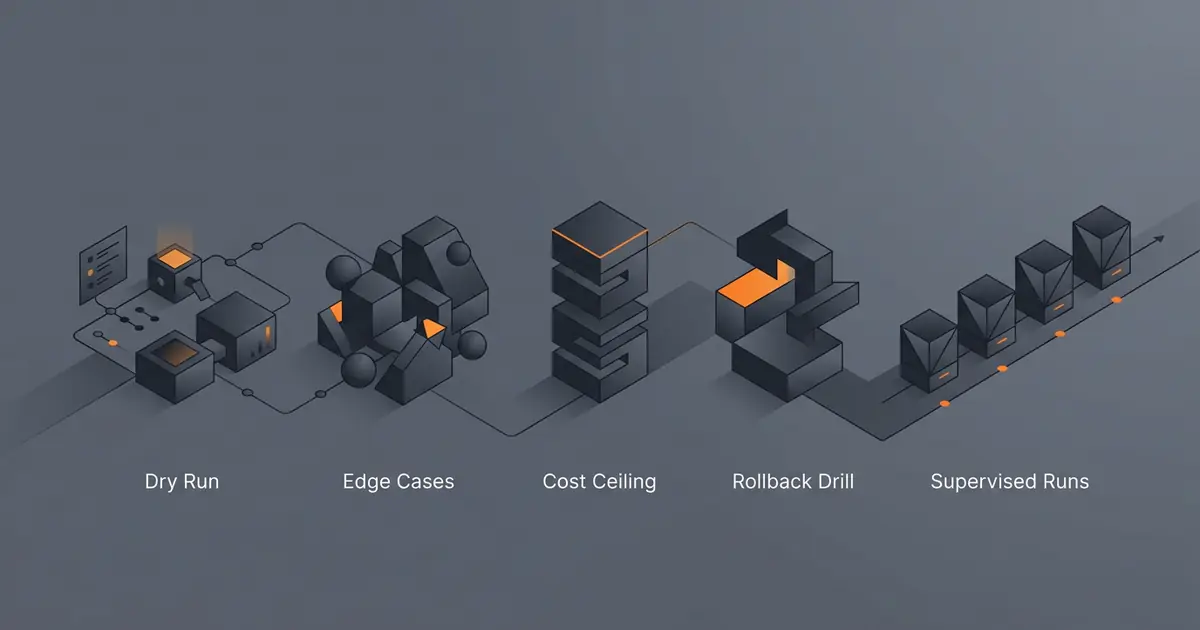
How to Test an AI Agent Before You Deploy It
An AI agent that has not been tested is an AI agent waiting to do something embarrassing or expensive on your behalf. Testing an agent looks different from testing software because the agent does not have a fixed…

How to Share an AI Agent With Your Team Safely
Sharing an AI agent with a team is the moment most agents quietly turn into a liability. The agent that one person built, supervised, and trusted now runs on inputs from people who did not write the prompt, with…

How to Set a Spending Cap on an AI Agent
An AI agent without a spending cap is an open tab on a model provider. Most of the time the bill is small. The expensive day is the one where the agent loops on a malformed input, or chains a search tool with itself…

How to Restrict an AI Agent to Business Hours
Restricting an AI agent to business hours is one of the cheapest reliability wins available. Most agent incidents are not catastrophic; they are awkward. An automated follow-up arriving at 3 a.m. looks like spam. A…
How to Write a Prompt for a Recurring AI Agent (That Won't Drift)
One-shot prompts and recurring agent prompts look the same on the page and behave differently in practice. A one-shot prompt runs once; you see the output; you re-prompt if it is wrong. A recurring agent prompt runs…

How to Stop an AI Agent Mid-Task (Without Breaking State)
An agent stopped mid-task is not the same as an agent that finished. If the agent has already taken some actions and not others, the world is in an inconsistent state. A flight booked, a hotel not yet booked. A label…

How to Set Up Your First AI Agent: A 2026 Walkthrough
Setting up a first AI agent is straightforward in 2026. The platforms work, the model quality is high enough, and the integrations cover most things a small business or solo professional cares about. What is not…

How to Roll Back an AI Agent's Action
"Roll back the agent's action" is not one operation. It is four operations, each appropriate for a different tier of action. Treating all rollbacks as equal leads to over-engineered Tier 1 actions and…

How to Monitor What an AI Agent Is Doing
Code fails loudly. An exception is thrown, the process crashes, the error reaches the dashboard, the operator gets an alert. AI agents fail differently. The agent picks a wrong interpretation, takes a wrong action,…

How to Migrate from Zapier to an AI Agent (Without Breaking Anything)
Zapier and AI agents solve overlapping problems with different mental models. Zapier is trigger-step-action: a fixed pipeline that runs the same way every time. AI agents are outcome-driven: the agent picks the…

How to Limit What an AI Agent Can Do (Blast Radius Control)
An agent that fails small is a fixable problem. An agent that fails catastrophically is a customer-trust event, a financial loss, or both. The difference is blast-radius control: the set of limits that bound what the…

How to Give an AI Agent Access to Your Email Safely
Email is the master credential. Most accounts route password resets through it; many financial accounts treat email-confirmed-this as proof of identity. Granting an AI agent access to email is the most consequential…

How to Debug an AI Agent That Did the Wrong Thing
Agent failures look like bugs but behave differently. A traditional code bug is deterministic; the same input always produces the same wrong output. An agent failure is a decision the agent made on an input where…